When most homeowners think about their air conditioning system, they think about the spring and summer months. However, when it comes to updating your HVAC system, winter is the ideal time of the year. Below, we’ll take a look at why this season is the best time for upgrades and what features you should consider getting.
Why Winter Is Ideal for AC Upgrades
There’s no doubt that the summer months in Arizona are extremely busy for HVAC contractors. Typically, they’re booked weeks or sometimes even months in advance when it comes to system upgrades. Contrarily, the wintertime tends to be a slower time of the year when it comes to air conditioning-related work.
This means you could benefit from more flexible appointment scheduling. You can take your time determining the appropriate upgrades to fit your needs and budget without feeling rushed due to the hot temperature. This can make the process more stress-free for any homeowner.
Another reason that winter is a good time for AC replacement is that you’ll likely be able to take advantage of seasonal incentives. Many HVAC contractors will provide discounts and promotions during the offseason to maintain a steady supply of work. This could reduce the upfront cost of your AC upgrades, making it more affordable for your budget.
One other reason that winter is a good time for AC upgrades is due to better installation conditions. If you opt for replacing your air conditioner in the middle of the summer, you’ll be stuck dealing with extremely hot weather with no control over your indoor temperature.
Signs It’s Time for AC Replacement
There are many different signs you should pay attention to as a homeowner that will indicate it’s likely time to upgrade your outdated air conditioning system. One of the most obvious is that it’s getting up there in age. Both central air conditioners and heat pumps have a usable lifespan of about 10 to 15 years. This is assuming they get proper care and upkeep.
If your unit is nearing the later years of its life, it’s best to schedule a replacement before you experience a major system malfunction. Aging systems will struggle to maintain even cooling throughout your home, which will lead to a rise in your energy bills. If you’re constantly calling to get repairs for your air conditioner, it’s likely time to upgrade instead of wasting money on repair work.
If your AC unit’s warranty coverage has expired, it’s likely time to upgrade. Additionally, if your air conditioner uses R-410A refrigerant, it may be a good time to consider upgrading to equipment that uses newer, lower-GWP refrigerants that meet updated environmental standards. These offer higher operating efficiencies and are the new standard for all home AC units.
Far too often, homeowners wait until their air conditioning system completely fails during heat waves in the summer before they consider a replacement. This can leave your home feeling extremely uncomfortable for days until a new unit can be installed. You can avoid this hassle by planning a replacement ahead of time. If you get routine maintenance service on your air conditioning system, our technicians can let you know when a replacement is likely necessary.
Types of AC Upgrades to Get in Winter
When it comes to upgrading your air conditioner components, you have many different options to choose from. You want to think about your indoor air quality, system efficiency, and your overall comfort. Below, we’ll discuss some of the most common AC upgrades homeowners opt to get in the winter.
High-Efficiency AC Units
One of the most common upgrades is replacing your entire air conditioning unit with a high-efficiency model. Units with a high SEER2 rating can significantly reduce your air conditioning costs during the warmer months of the year. They typically provide quieter system operation and enhanced humidity control. They come with newer refrigerants that are more environmentally friendly, which can go a long way in giving you peace of mind about your home’s carbon footprint.
Heat Pumps
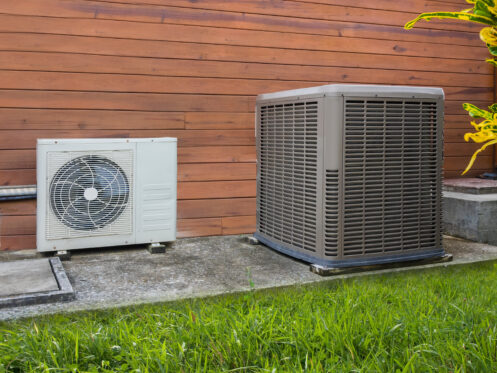
If you need to upgrade both your heating and air conditioning systems, you may want to consider getting a heat pump. This is one of the most energy-efficient HVAC units on the market that offers both home heating and cooling in one unit. Heat pumps rely on electricity to transport heat from one location to the next. Their variable-speed setup allows for consistent indoor temperatures, and many are eligible for rebates and tax incentives due to their high operating efficiency.
Smart Thermostats and Zoning Systems
Another popular HVAC upgrade is a smart thermostat. These help you maximize your annual energy savings by better optimizing your HVAC system’s performance. The ability to control your thermostat from the convenience of your smartphone allows you to receive alerts when there’s an issue with your system and monitor its energy usage in real time.
A popular upgrade to pair with a smart thermostat is a zoning system. Zoning systems are great for multistory and larger homes that can benefit from having multiple different temperature zones. Each zone has its own thermostat that can be set independently from all the rest. For example, many two-story homes experience warmer upstairs temperatures compared to downstairs. This is the result of heat naturally rising.
By putting the upstairs and the downstairs in their own temperature zones, you can better optimize your comfort. When the upstairs of your home gets too hot, the thermostat will trigger your air conditioning system to turn on with the zone ducting controls. All the cool air that your air conditioning system produces only gets delivered to the upstairs where it’s needed. This will save you a bundle, as you won’t have to pay to run your air conditioning system to cool both areas when it’s unnecessary.
Ducting Improvements
If you have a central air conditioning system or a heat pump, then you rely on ductwork to deliver treated air throughout your home. Unfortunately, if your ductwork is poorly designed or has developed leaks, it can allow a lot of your cold air to escape before it reaches the rooms in your home. The EPA estimates that homeowners can be paying up to 30% more on their annual cooling costs due to leaky ductwork.
One thing you can do is invest in ductwork sealing service. This is where a professional comes in and cleans all of your ducting, then applies a specialized resin. This resin adheres to the inside of your ducting and creates an airtight barrier to seal up any leaks. This will ensure that all the cold air that your air conditioner produces makes it to the rooms in your home, preventing overpaying for your summertime cooling bills.
Reliable AC Upgrade Service
Cool Zone Air Conditioning & Heating offers expert AC upgrade service for the Phoenix, AZ community. We can also assist with all your AC tune-up and repair needs. Just call us today to book your next service consultation.